
Ola Electric Mobility Ltd is redirecting 575 crore from its initial public offering (IPO) proceeds, originally earmarked for research and product development, towards debt repayment and organic growth initiatives, signalling mounting pressure on the electric-vehicle maker.

India's electric motorcycle market is experiencing significant growth, with a 28 per cent year-on-year increase in volumes, as new product launches and improved total cost of ownership attract a broader base of riders beyond early adopters.
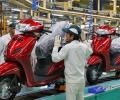
Honda Motorcycle & Scooter India (HMSI) plans to create over 3,800 jobs and expand its annual two-wheeler production capacity to 80 lakh units by 2028, reinforcing India's role as a global manufacturing and export hub for Honda.

Retail sales of electric passenger vehicles (ePVs) nearly doubled in July 2025, surging 93 per cent year-on-year (Y-o-Y) to 15,528 units, even as overall passenger vehicle (PV) retail volumes declined marginally. In contrast, electric two-wheeler (e2W) sales dropped by 4.3 per cent to 102,973 units, according to the Federation of Automobile Dealers Associations (Fada) data.
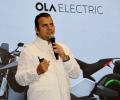
Why has the shift from ICE to electric slowed down despite initial enthusiasm?

TVS Motor Company is strategically positioned for sustained outperformance in the domestic two-wheeler industry, propelled by increasing market share in scooters, premium motorcycles, electric vehicles (EVs), and robust export growth, according to analysts.

The all-new, globally first YZF-R2 is priced from Rs 2,30,500 (ex-showroom, Delhi).

Bajaj Auto is planning a slow, calibrated push to take the Chetak, its electric scooter, to more than 100 countries on the strength of its distributor network and market-specific localisation rather than an aggressive global rollout, reports Sohini Das.

Larsen & Toubro (L&T) is investing Rs 5,000 crore over five years to enter the automotive components sector, focusing on electric vehicle (EV) motors, safety systems, and connected-vehicle technologies, aiming to become a Tier-I auto supplier.
Shares of electric vehicle (EV) maker Ola Electric Mobility fell nearly 7 per cent to a fresh low on Monday after its revenue growth in the third quarter (October-December/Q3) of 2025-26 (FY26) slowed, with analysts warning that any turnaround could be prolonged.

India's electric vehicle market is experiencing an unprecedented boom with a 37 per cent increase in new entrants, driven by supportive policies and infrastructure.
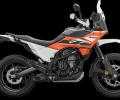
Bajaj Auto reported a significant increase in its consolidated Q4FY26 performance, with profit after tax more than doubling to approximately 3,662 crore, a 103 per cent year-on-year rise, primarily driven by record volumes, an improved product mix, and the strategic consolidation of Bajaj Auto International Holdings AG (BAIHAG).
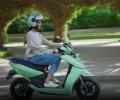
The Delhi government has approved the Delhi EV Policy 2.0, which will phase out fresh registrations of internal combustion engine (ICE) two-wheelers and three-wheelers over the next two years, starting with a ban on ICE 3Ws and N1 category LCVs from January 1, 2027, and ICE 2Ws from April 1, 2028.

A single night of deadly floods wiped out an entire village in Assam, leaving families without homes, cattle or hope.

India will have 30 per cent of its two-wheeler industry turning electric by 2030 as new manufacturers lead the shift, said a report on Monday. Passenger vehicles will be 15 per cent electric and the three-wheeler segment 75 per cent electric by 2030, said the report by BNP Paribas called 'India Autos-Electric vehicles: Minutes to midnight'. "We see FY22 as the year of inflection for the two-wheeler EV industry, with an accelerated EV adoption helped by incentives, wider availability, model launches, rise in crude prices and improved general awareness. We see 30 per cent of the 2W industry turning electric by 2030; the pace of incentive withdrawal presents an upside/downside risk," the report (India Autos - Electric vehicles: Minutes to midnight) said.

Electric vehicle (EV) retail sales surged 16.37 per cent year-on-year to 22,70,107 units in 2025, driven by a 77 per cent jump in electric passenger car sales, according to data released by dealers' body FADA on Wednesday. The EV makers had recorded a total sales of 19,50,727 units in 2024, the Federation of Automobile Dealers' Association (FADA) said.
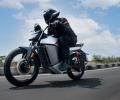
Clearly, some of the bullishness of the early days has gone missing. Ola's market share is slipping amid rising competition from incumbents like Bajaj Auto and TVS.

The production-linked incentive (PLI) scheme for the automobile sector has created market distortions, excluded innovation-led electric two-wheeler (e2w) makers, and failed to convert cost advantages into export competitiveness, with 77 per cent of export volumes driven by non-PLI models, said a report released by the Centre for Domestic Economy Policy Research (C-DEP) on Friday.

A fire in a five-storey residential building in southeast Delhi's Govindpuri area resulted in three fatalities and two critical injuries. Eight people were rescued, and an electrical short circuit is suspected as the cause.

Kerala has overtaken more industrialised states in personal electric vehicle adoption, driven by strong middle-class uptake, policy support, and charging infrastructure.
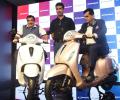
Bajaj Auto has virtually closed the gap with Ather Energy in September, notching up 6423 EV registrations compared to 6466 registrations by Ather.
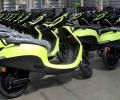
India's electric two-wheeler (e2W) manufacturers have urged the government to extend subsidies under the PM E-Drive (Electric Drive Revolution in Innovative Vehicle Enhancement) scheme beyond March 2026, cautioning that a withdrawal could slow near-term demand even as confidence in long-term electric mobility adoption remains intact.

The BSA Gold Star is launched....Ola Enters e-motorbikes Biz... Bajaj, TVS To Enter e2Ws Market...

Prime Minister Narendra Modi has appealed to citizens to adopt austerity measures, including avoiding destination weddings abroad and reducing edible oil consumption, to mitigate the impact of the West Asia crisis on India's economy.
Under FAME-II, automakers provided subsidies to electric vehicle (EV) customers at the time of purchase, with the understanding that the government would reimburse the firms later.

Fuel prices have risen by about Rs 7.5 per litre since May 15, as global crude oil prices surged due to the ongoing conflict in West Asia and supply concerns around the Strait of Hormuz.

Mahindra and Mahindra (M&M) recorded the sharpest acceleration among large players, with EV retail jumping to 33,513 units from 7,139 units, an almost 5-fold jump, aided by strong demand for new launches.
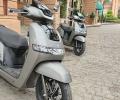
Hero MotoCorp and TVS Motor crossed Rs 1,000 crore in R&D spend for the first time, as legacy OEMs accelerate innovation to compete with new-age EV players.

Japanese automaker Honda plans to introduce over 10 new models, including electric vehicles and compact SUVs, in India by 2030, identifying India as one of its three key markets for future growth.

A devastating fire in a five-storey residential building in southeast Delhi's Govindpuri claimed the lives of three family members and critically injured two others. Residents resorted to desperate measures, including climbing out of windows with the help of sarees and shouting for help from the rooftop, as thick smoke and flames engulfed the structure.
Ola Electric has eliminated its regional warehouses across India, and will now leverage its 4,000 retail stores nationwide for maintaining vehicle inventory, spare parts, accessories, and last-mile deliveries. The strategic move is expected to boost EBITDA margins by almost 10 percentage points, besides improving inventory management and faster customer deliveries, sources directly familiar with the matter said.
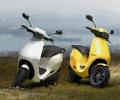
Driven by improved customer experience, Ola Electric is witnessing "clear outcomes" in market share from its focused service transformation programme, the company said, as it registered 9,020 units in December, lifting its month-on-month share to 9.3 per cent from 7.2 per cent in November.
Driven by improved customer experience, Ola Electric is witnessing "clear outcomes" in market share from its focused service transformation programme, the company said, as it registered 9,020 units in December, lifting its month-on-month share to 9.3 per cent from 7.2 per cent in November.

French automotive component maker Valeo on Wednesday said it will invest over Rs 2,150 crore in India and treble its annual sales in the country to around Rs 7,510 crore by 2028.

The state is also the biggest market for TVS, another incumbent player, and together with Bajaj Auto, they accounted for 88 per cent of Maharashtra's total electric scooter sales last month. As many as 8,417 units were sold in Maharashtra in September. Bajaj Auto's contribution was 4,048 vehicles and that of TVS was 3,389, according to model- and state-wise data from the Society of Indian Automobile Manufacturers (Siam).

South Korean automaker Hyundai Motor Company on Tuesday exited Ola Electric Mobility by selling its entire 2.47 per cent stake in the company for Rs 552 crore through an open market transaction. According to the bulk deal data available on the NSE, Hyundai Motor Company sold more than 10.88 crore shares or 2.47 per cent stake in Bengaluru-based Ola Electric Mobility.
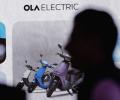
Ola Electric's latest MoveOS 5 upgrade delivers sharper performance on its Gen 3 platform due to an optimised in-house Motor Control Unit that enhances range and responsiveness.
GSM, which is potentially eyeing a Hong Kong listing and was recently valued at $20 billion, operates on a distinct model -- it owns the e-taxis and employs the drivers, while also supplying cars to independent drivers or fleet operators.
Honda Motorcycle and Scooter India (HMSI), the country's second-largest two-wheeler manufacturer, is planning to launch its first electric vehicle (EV) here by March next year, said CEO & MD Atsushi Ogata on Monday. The company would also enter the low-end motorcycle market in March by launching a 100cc engine bike at a price that will "positively shock" customers, he said while speaking with reporters, after launching the Activa with Honda Smart Key. HMSI's first EV, an electric scooter, will have a fixed battery and the second model will have two swappable batteries, Ogata explained.
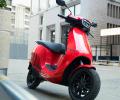
Ola Electric, India's largest electric vehicle company, has achieved a significant milestone by becoming the first two-wheeler automotive electric vehicle (EV) manufacturer in India to receive incentives under the Production Linked Incentive (PLI) Scheme for Automotive and Auto Component (PLI-Auto Scheme). The company has been granted a total incentive of Rs 73.74 crore for the Determined Sales Value of FY 2023-24 under the scheme, according to a stock exchange filing by the company.
